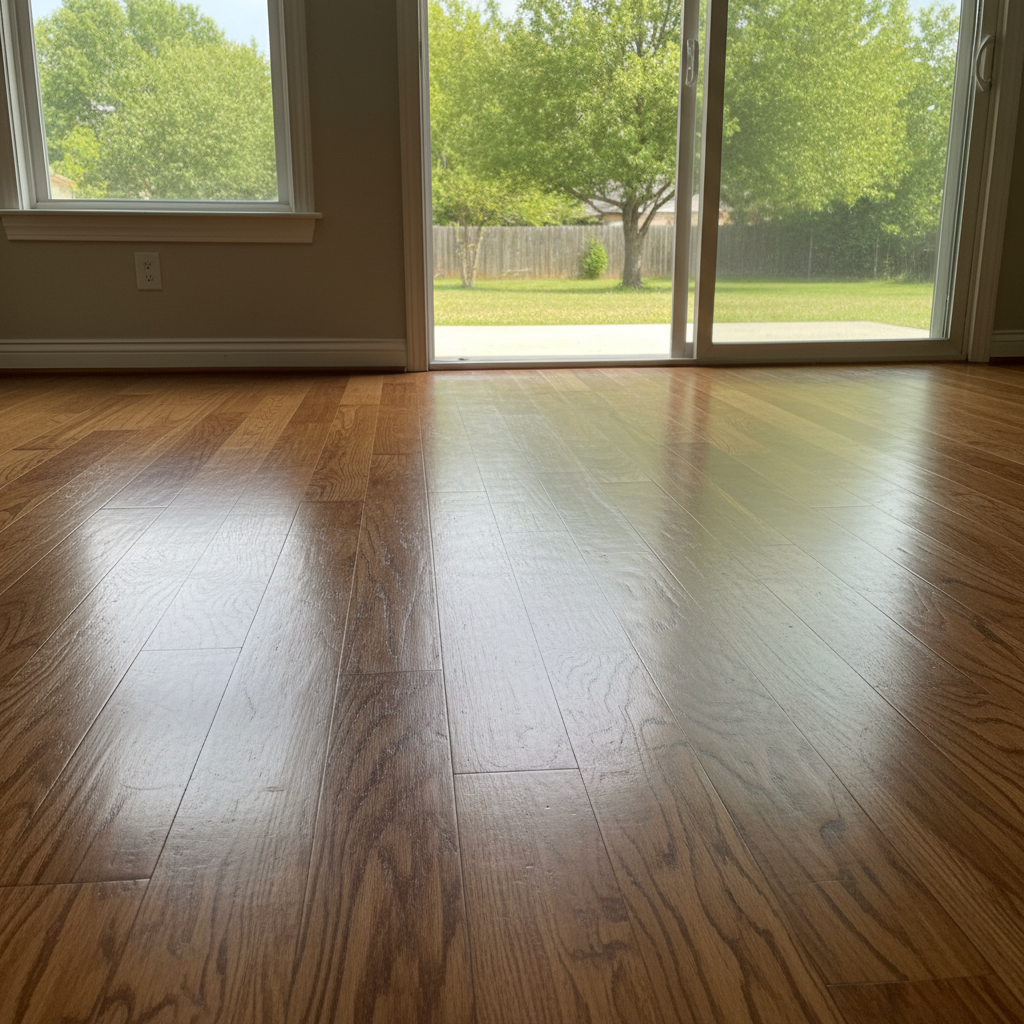
Water standing on hardwood floors makes any homeowner's stomach drop. A supply line failure under the sink or a severe storm blowing rain in past a loose window frame means dealing with moisture on wood requires fast action. Around Farmersville, where the local weather swings from bone-dry spells to sudden, heavy downpours that test every roof and foundation, Premier Restoration gets a lot of questions about whether water-damaged wood can actually be saved.
Can soaked hardwood floors always be saved, or do they always need replacement?
The short answer is no, homeowners do not always have to rip everything out. How Premier Restoration answers this depends heavily on three things: how long the water has been sitting, the type of flooring material you have, and how the wood responds to drying equipment. Solid hardwood can often be dried, sanded, and refinished even if it cups or buckles slightly. Engineered hardwood is a bit trickier because the top veneer is thin, and heavy saturation can cause the layers to delaminate. If the subfloor underneath is rotting or mold has already taken root, Water Damage Restoration Service becomes necessary, and replacement becomes the safer bet for homes in Farmersville.
How fast do I need to act before permanent damage sets in?
Homeowners have a very small window here, usually less than 24 to 48 hours. Wood acts like a giant sponge. Once moisture penetrates past the factory finish and gets deep into the grain, the wood fibers swell up and press against each other. That is what causes cupping and crowning. Premier Restoration advises calling for help immediately when you spot standing water. Waiting a few days to see if it dries on its own usually turns a simple drying job into a full replacement project.
What does the actual restoration process look like?
Premier Restoration does not just set up a box fan and hope for the best. Real hardwood restoration requires specialized gear. First, we extract any standing surface water. Then, we set up high-pressure commercial air movers and dehumidifiers to pull moisture out of the wood from both the top and the underside if we can access the crawlspace or basement. Sometimes we use specialized weighted drying mats that pull moisture directly up through the surface of the boards while monitoring progress with pinless digital meters. For Farmersville properties, Water Damage Restoration Service follows these exact technical steps to make sure the structure stabilizes correctly.
Why are my hardwood boards buckling and cupping?
Cupping happens when the bottom of the board absorbs more moisture than the top, causing the edges to rise up higher than the center. Buckling is much worse—that is when the wood actually lifts completely off the subfloor because there is so much internal pressure. This usually happens when water gets trapped underneath or stays on top too long. Once the moisture is completely extracted, some minor cupping will flatten out naturally as the wood releases water, but severe buckling usually means those boards are toast.
Can I use heaters or hair dryers to speed things up?
Please do not do that. Cranking up the heat or blasting a section with direct, high-heat appliances causes the top layer of the wood to dry out too fast while the core stays wet. That creates extreme stress, leading to severe cracking, splitting, and permanent warping. Wood needs to dry slowly and evenly under controlled atmospheric conditions. At Premier Restoration, we manage the relative humidity and airflow carefully so the wood stabilizes without tearing itself apart during Water Damage Restoration Service work in Farmersville.
Will homeowners insurance cover hardwood floor water damage?
That depends entirely on the source of the water. Sudden and accidental plumbing failures—like a burst pipe or a sudden supply line break—are typically covered by standard homeowners policies. On the flip side, damage caused by gradual leaks you ignored for months or rising groundwater from outside typically is not covered. Always check your specific policy details and call your adjuster early, but document everything with clear photos before any cleanup starts.
How long until I can walk on or refinish the floor again?
The drying phase usually takes anywhere from three to five days, depending on how deep the water got. But you cannot rush the refinishing stage. Once the moisture meter readings match the normal ambient equilibrium of your home, the wood still needs time to settle down before sanding. Slapping a fresh coat of stain or polyurethane on wood that still holds internal moisture is a recipe for peeling finishes and future failure. For homes in Farmersville, Premier Restoration provides reliable Water Damage Restoration Service to ensure floors are fully dry before any finishing work begins.